
Our Heritage
In leather since 1936.
From an apprenticeship in British Colombo to a Chennai workshop shipping worldwide — one family, four generations, one material.
The Legacy
Ninety years, one material
1936
The Apprentice
Founder P.M. Rahmathulla begins his career as a leather trader, apprenticing under his father P. Mohamed Ismail — a renowned supplier of leather to book binders in British Colombo.
1944
The Tannery
After eight years in the trade, Rahmathulla commences his own tanning operation, working the hides himself.
1950
PMR & Co
PMR & Co is established. The tannery works mainly in cow hides, producing farm-related goods sold to local farmers.
1966
The Export Era
The family registers its trademark brand to export vegetable-tanned cow hides. Rahmathulla pioneers a unique process for cow calf skins — an instant success in the United Kingdom and Italy.
1990
End of an Era
India bans the export of vegetable-tanned leather, closing the chapter on the veg-tan trade that had defined the house for a generation.
2000
Back to the Trade
The family returns to the leather trade in Chennai as a wholesale trader, exporter and importer — waist bags, baskets, woven totes and straw bags moving through the city's Periyamet leather quarter.
2016
A New Workshop
The family name returns to leather: P.M. Rahamathulla & Co is founded in Periyamet, Chennai — this time as a manufacturer and exporter of finished goods, from hand-braided totes to woven baskets.
Today
Isvena
Nearly ninety years after that first apprenticeship, Isvena carries the family's craft directly to a global wardrobe.
The Modern Chapter
From export orders to a name of our own
The current workshop, P.M. Rahamathulla & Co, was founded in 2016 in Chennai, Tamil Nadu — returning the family to the material it has worked since 1936. For years, it has produced hand-woven totes, shoulder bags, belt bags and clutches for buyers around the world, refining a weaving technique few workshops still practice at this scale.
Isvena is the next chapter of that same workshop: the same artisans, the same hides, the same braid — now built as a direct-to-you house rather than a name on a private label. Every piece we sell today is made in the same hands that have been perfecting this craft since our first year in business.
We remain a small operation by design. Growth, for us, means training more artisans in the braid, not shortcuts in the leather.
How a Piece is Made
From hide to hand-braid
Sourcing
We work with tanneries that specialize in vegetable-tanned, chrome-free hides — the same method that made our family's name 90 years ago. This leather is safer for skin, fully biodegradable, and develops a rich patina with age.
Cutting
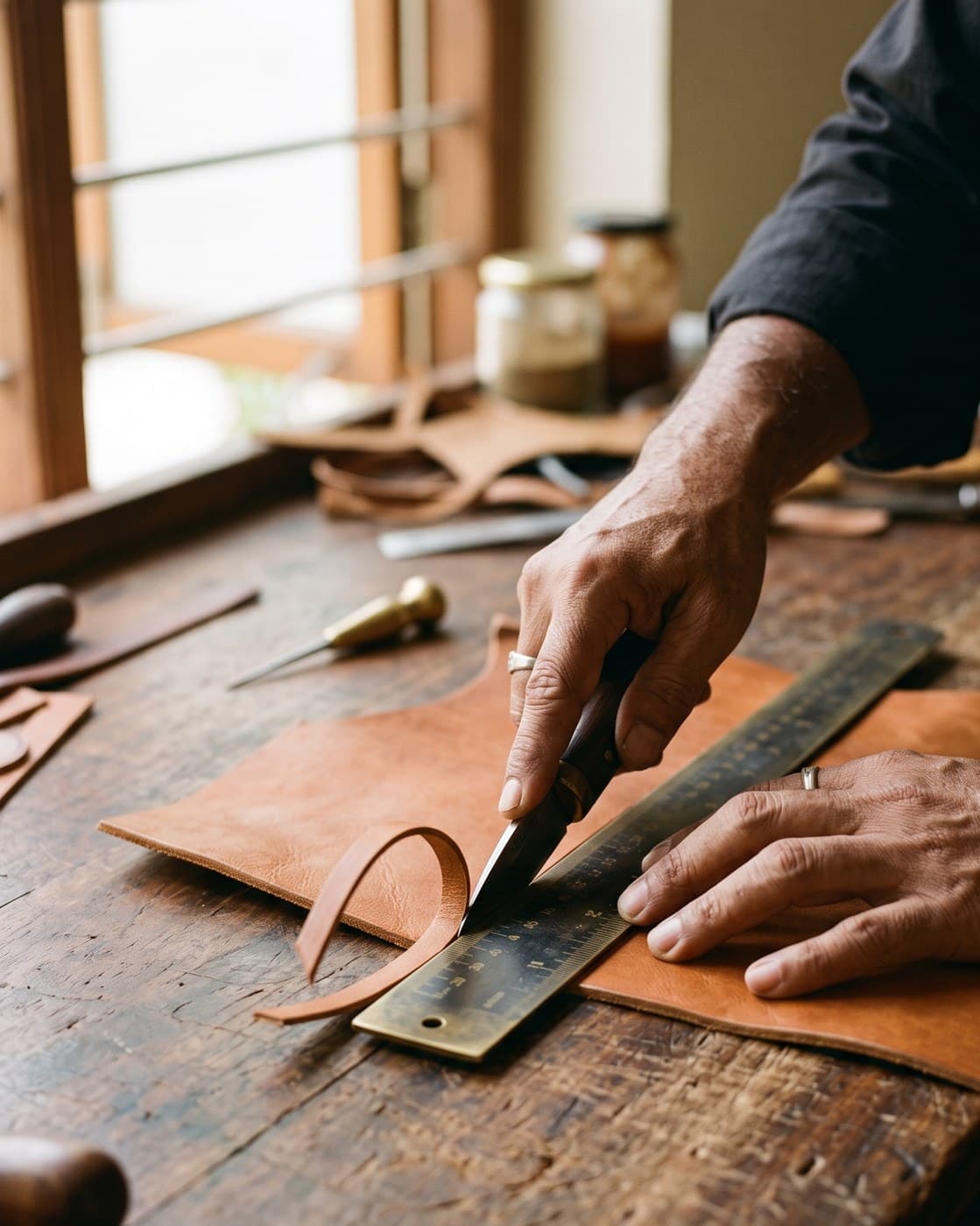
Every hide is inspected and hand-cut into strips as narrow as 4mm, sized to the pattern of the piece it will become.
Braiding
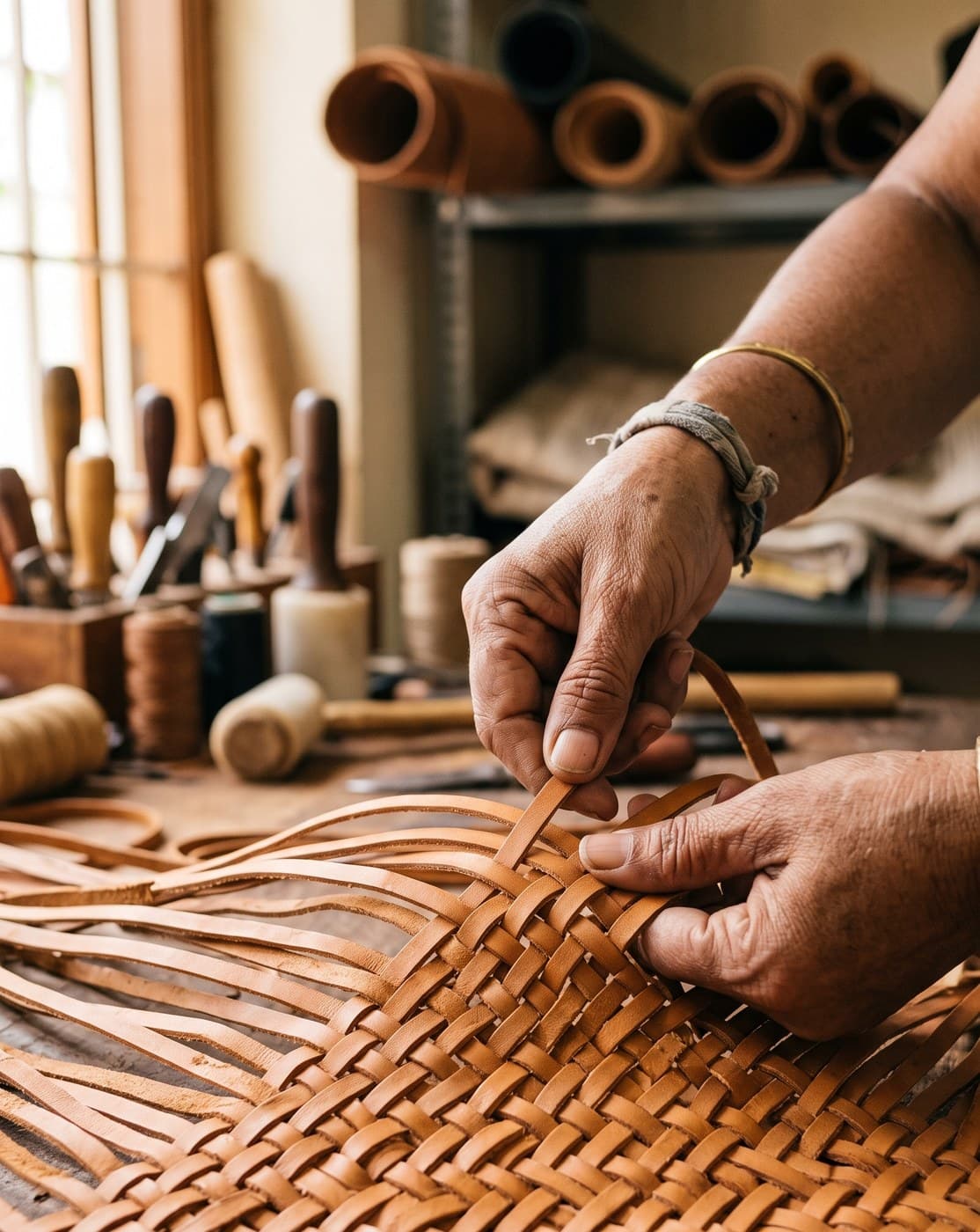
Our senior artisans, many trained in the workshop for over a decade, interlace each strip by hand — a single tote can take upward of a full day to weave.
Finishing
Edges are burnished, hardware is set in solid brass, and every piece is inspected by hand before it leaves the Chennai workshop.
Why Vegetable-Tanned Leather
Chrome-free, safe, and built to last centuries
Safe for Your Skin
Vegetable-tanned leather is chrome-free and non-toxic. Unlike chrome-tanned leather, which uses heavy metals and can cause allergic reactions, our leather is safe to wear directly against your skin every day, without concerns.
Fully Biodegradable
Our leather breaks down naturally at the end of its life, returning to the earth. Chrome-tanned leather can take decades to decompose. Vegetable-tanning uses plant extracts — a process as old as leather itself.
Develops Character
Vegetable-tanned leather ages beautifully, developing a rich patina and deepening in color with time and use. Your Isvena piece becomes uniquely yours, improving with every year you carry it.
Built to Last Centuries
Vegetable-tanned leather from well-maintained pieces can last 100 years or more. This is the leather that bound medieval manuscripts and still survives in museums today.
“A machine can stitch a bag. It cannot braid one. That difference is the entire business.”
P.M. Rahamathulla & Co. — In leather since 1936